
A productive Mississippi pond is more than a place to cast a line. Around Lumberton and across South Mississippi, the fish you stock, the order you stock them, and the balance between predators and forage can determine whether a pond develops into a healthy fishery or struggles with overcrowding and poor growth.
Quick answer: For Mississippi ponds of at least 1 acre, a combination of largemouth bass and bluegill is the standard foundation for a balanced sport fishery. Redear sunfish can add diversity, while channel catfish, triploid grass carp, and selected forage species can serve specific management goals. Mississippi State University Extension recommends establishing bream before adding bass so the pond has a forage base ready for young predators.
What local pond owners should know
-
Largemouth bass and bluegill create the primary predator-prey relationship recommended for Mississippi ponds of at least 1 acre.
-
Redear sunfish, commonly called shellcrackers, can complement bluegill and provide another popular sport fish.
-
Around Lumberton and the surrounding South Mississippi region, stocking should be planned around pond acreage, fishing goals, existing fish, vegetation, and water conditions.
-
Channel catfish can provide additional fishing opportunities, but they generally require periodic restocking in ponds containing bass.
-
Stocking extra fish every year is not necessarily beneficial and can contribute to overcrowding and poor fish growth.
Why Does Proper Fish Stocking Matter for Mississippi Ponds?
Proper fish stocking matters because a healthy Mississippi sport pond depends on maintaining enough forage to support predators without allowing prey fish to become overcrowded. The goal is not simply to put desirable species into the water. Pond owners need compatible species, appropriate numbers, correct timing, and a management plan that supports the type of fishing they want.
Mississippi State University Extension describes proper construction, stocking, and fishing as the basic foundations of successful pond management. It also emphasizes defining the pond’s objective before selecting fish. A pond managed for trophy bass, for example, requires different priorities than one intended to produce large bream.
For property owners near Lumberton, Purvis, Poplarville, Hattiesburg, and other South Mississippi communities, that planning should happen before the first load of fingerlings arrives.
Slade’s Fish Hatchery in Lumberton, MS, can help pond owners think through stocking choices based on their pond and fishing objectives. From this point forward, we recommend treating fish stocking as the beginning of an ongoing management process rather than a one-time addition of fish.
What Are the Best Sport Fish for a Healthy Mississippi Pond?
The best sport fish for many Mississippi ponds are largemouth bass and bluegill, with redear sunfish and channel catfish serving as useful additions when they match the owner’s goals. Mississippi State University Extension identifies the bass-bluegill combination as the best starting point for sustained fishing quality in ponds of at least 1 acre.
Largemouth Bass
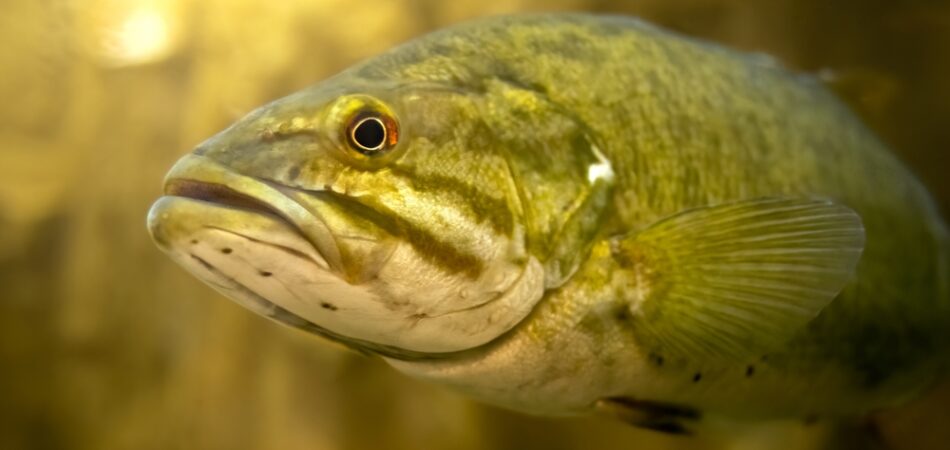
Largemouth bass provide the primary predator component. They consume smaller fish and help control bluegill reproduction while providing one of Mississippi’s most sought-after freshwater sport-fishing opportunities.
Mississippi ponds may be stocked with different largemouth bass strains, but management can matter more than strain alone. MSU Extension notes that Northern, Florida, and hybrid largemouth bass have all been used successfully in the state.
Bluegill
Bluegill, or bream, form the forage foundation of the classic bass-bluegill pond. Their reproduction supplies young fish that bass can consume, while adult bluegill provide excellent fishing.
Both native and coppernose bluegill are used in Mississippi. MSU Extension notes that the two are biologically similar and that pond management has a greater effect on their ultimate performance than simply choosing one strain over the other.
Redear Sunfish
Redear sunfish, often called shellcrackers or chinquapins, can be stocked alongside bluegill. They add another fishing opportunity and consume snails, which can play a role in the life cycles of certain fish parasites.
Channel Catfish
Channel catfish are an optional addition for owners who want more variety. Unlike the bass-bluegill relationship, catfish populations generally do not reproduce successfully enough in bass ponds to maintain themselves, so harvested fish may eventually need to be replaced.
How Many Fish Should You Stock Per Acre?
For an unfertilized Mississippi pond of at least 1 acre, a common recommendation is 500 bream and 50 largemouth bass per acre, with optional species added according to management goals. If redear sunfish are included, MSU Extension recommends dividing the 500 bream into 350 bluegill and 150 redear sunfish per acre.
A typical starting combination can include:
-
350 bluegill per acre
-
150 redear sunfish per acre
-
50 largemouth bass per acre
-
Up to 50 channel catfish per acre, if desired
-
Triploid grass carp where appropriate for vegetation management
These figures are not universal prescriptions for every pond. Fertilized ponds use different stocking rates, and existing ponds may require population assessment before additional fish are introduced. Pond size also matters considerably.
When Should You Stock Fish in South Mississippi?
A new Mississippi pond is generally stocked with bream and other selected species in fall or winter, followed by largemouth bass the next spring. This sequence allows bluegill and redear sunfish to become established and begin producing forage before young bass enter the system.
For a new or properly renovated pond near Lumberton, the general sequence is:
-
Stock bluegill and redear sunfish in fall or winter.
-
Add optional channel catfish, triploid grass carp, and fathead minnows during this initial period when appropriate.
-
Stock largemouth bass the following spring as the bream begin spawning.
The pond does not necessarily have to be completely full at initial stocking. MSU Extension advises that it should be at least half full and filling for its standard stocking schedule.
What Warning Signs Suggest a Pond Is Out of Balance?
A pond may be out of balance when anglers repeatedly catch fish from one narrow size range, sport fish show poor growth, or one species becomes overwhelmingly abundant. Healthy populations contain appropriate predator and prey numbers, so changes in catch patterns can provide useful clues about what is happening below the surface.
Watch for:
-
Large numbers of small, thin bluegill with few quality-size fish
-
Frequent catches of small bass but very few larger bass
-
Poor growth among previously stocked fish
-
An apparent shortage of forage fish
-
Excessive aquatic vegetation that interferes with fishing or predator access
-
Repeated fish stress or unexplained mortality
-
A sudden change in the species or sizes regularly caught
Keeping fishing records can make these trends easier to identify over time.
When Should You Call a Pond or Fish Stocking Professional?
You should seek professional stocking guidance when establishing a new fishery, renovating an existing pond, correcting an unbalanced population, or adding species to a pond that already contains fish. Adding fingerlings without knowing what is currently living in the water can make an existing problem worse.
We can help pond owners consider pond acreage, existing fish populations, desired sport species, and stocking timing before selecting fish.
Mississippi State University Extension also advises against moving fish from another lake, creek, river, or pond into your own water. Doing so can introduce unwanted species, diseases, or parasites, and it makes proper stocking ratios difficult to maintain.
What Common Stocking Mistakes Hurt Mississippi Pond Health?
The most damaging stocking mistakes include using the wrong species, stocking predators before establishing forage, adding excessive numbers of fish, and repeatedly restocking a pond that already has a reproducing population. Each mistake can disrupt the predator-prey relationship that keeps a sport pond productive.
Mistake: Stocking bass before establishing bream.
Consequence: Young bass may enter a pond without an adequate forage base.
Better approach: Establish bream first and follow with bass during the recommended spring stocking period.
Mistake: Adding crappie to a small pond.
Consequence: Crappie can overpopulate and compete with bass and bream.
Better approach: MSU Extension does not recommend crappie in ponds under 50 acres.
Mistake: Assuming more fish always means better fishing.
Consequence: Excess fish can increase competition and lead to stunting.
Better approach: Stock according to pond acreage and management goals.
Mistake: Adding fish from another water body.
Consequence: Unwanted species, parasites, or diseases may enter the pond.
Better approach: Obtain fish from a reliable hatchery.
How Can Pond Owners Maintain a Healthy Fish Population?
Maintaining a healthy Mississippi pond requires monitoring harvest, fish sizes, vegetation, water conditions, and population balance after the initial stocking is complete. Correct stocking establishes the fishery, but fishing pressure and ongoing management determine how that population develops over the following years.
Record the species and approximate sizes you catch. Avoid automatically adding more bass or bluegill simply because fishing slows down. In properly managed bass-bluegill ponds, these species reproduce naturally and typically do not require routine restocking.
Channel catfish are different. After substantial harvest, replacement fish may be needed, and MSU Extension recommends larger catfish for established bass ponds so they are less vulnerable to predation.
Common Local Scenario: Starting a New South Mississippi Fishing Pond
A common South Mississippi scenario is a landowner with a new pond who wants dependable family fishing for bass, bream, and possibly catfish. Instead of stocking every desired species simultaneously, the better approach is to establish the forage population first and build the predator population afterward.
For a pond of at least 1 acre near Lumberton, that may mean establishing bluegill and redear sunfish during fall or winter, adding optional species that fit the management plan, and introducing largemouth bass the following spring.
The exact plan should still reflect pond acreage, whether the pond will be fertilized, vegetation goals, and the owner’s preferred fishing experience.
How Do Small Ponds Differ From Larger Fishing Ponds?
Ponds smaller than 1 acre generally require a different stocking strategy because maintaining a balanced bass-bluegill population becomes more difficult in limited water. Mississippi State University Extension recommends alternatives such as channel catfish or carefully managed hybrid bream systems for smaller ponds rather than simply shrinking a standard bass-bluegill plan.
This distinction matters for small farm ponds and residential ponds throughout Lamar County and neighboring areas. Before ordering fish, measure the pond’s actual surface acreage rather than estimating from memory.
Which Fish Should You Avoid Stocking?
Mississippi pond owners should avoid adding species that conflict with their management objectives, especially crappie in smaller impoundments and unplanned fish transferred from other waters. Even familiar sport fish can cause population problems when placed in the wrong pond.
MSU Extension specifically advises against crappie in ponds under 50 acres because of their tendency to overpopulate and compete with bass and bream. It also states that tilapia are not legal to stock in Mississippi.
Hybrid bream require their own management approach and should not simply be mixed into a traditional bass-bluegill-redear pond.
What Results Can You Expect From Proper Pond Stocking?
Proper stocking gives a Mississippi pond the biological foundation needed to develop a sustainable, enjoyable fishery, but the eventual results depend on continued management. Fish growth, catch rates, vegetation, harvest decisions, water quality, feeding, fertilization, and the owner’s fishing objectives all influence what the pond becomes.
A properly managed bass-bluegill pond can reproduce naturally and provide fishing opportunities for years without routine restocking of those primary species.
Ready to Plan Your Pond Stocking?
Contact us to discuss fish species, pond acreage, stocking timing, and the type of fishing experience you want to build.
How Do Your Pond Stocking Options Compare?
The right stocking option depends primarily on pond size and whether your priority is balanced sport fishing, catfish production, trophy bream, or another specific objective. Choosing the objective first makes it easier to select fish that work together instead of competing against the management plan.
| Pond Goal | Potential Approach | Key Consideration |
|---|---|---|
| Balanced sport fishing | Bass, bluegill, optional redear | Best suited to ponds at least 1 acre |
| Added fishing variety | Add channel catfish | Periodic restocking may be needed |
| Small pond fishing | Catfish or hybrid bream system | Requires different management from a standard bass-bluegill pond |
| Vegetation management | Triploid grass carp where appropriate | Stock according to vegetation conditions and pond goals |
| Trophy-oriented fishing | Customized bass or bream strategy | One objective generally takes priority |
What Areas Can We Help With Pond Stocking?
We serve pond owners from our Lumberton, Mississippi location and can help customers determine whether available fish and stocking options fit their pond-management goals. Pond owners from Lamar County and nearby South Mississippi communities can contact us to discuss availability and an appropriate stocking approach.
Mississippi State University Extension’s current sport-fish supplier publication lists Slade’s Fish Hatchery in Lumberton and identifies multiple sport and pond-management fish types available through the hatchery.
What Does It Cost to Ignore an Unbalanced Pond?
Ignoring an unbalanced fish population can cost pond owners years of productive growth because overcrowding and poor predator-prey ratios do not necessarily correct themselves. Adding the wrong fish can further complicate the problem, especially when an established pond already contains unknown or undesirable species.
Before investing in more fingerlings, determine whether stocking is actually the solution. Sometimes harvest changes, vegetation management, or a complete renovation may be more appropriate than adding fish.
Protect the Fishery You Are Building
Talk with us before adding fish to an established pond so your next stocking decision supports long-term pond health rather than simply increasing fish numbers.
Frequently Asked Questions About Stocking Mississippi Ponds
What fish should I stock in a Mississippi pond?
Largemouth bass and bluegill are the standard combination for a balanced Mississippi sport pond of at least 1 acre. Redear sunfish can be included with bluegill, while channel catfish and triploid grass carp may be added when they support the owner’s fishing or vegetation-management goals.
How many bass and bluegill should I stock per acre in Mississippi?
For an unfertilized pond of at least 1 acre, MSU Extension recommends 50 largemouth bass and 500 bream per acre. The bream can consist entirely of bluegill or a combination of 350 bluegill and 150 redear sunfish per acre. Fertilized ponds have different recommendations.
Should I stock bass or bluegill first near Lumberton?
Bluegill and redear sunfish should generally be stocked before largemouth bass in a new Lumberton-area pond. MSU Extension recommends stocking bream in fall or winter and introducing bass the following spring, giving the forage population time to become established and begin reproducing.
Can I stock crappie in my South Mississippi farm pond?
Crappie generally should not be stocked in a typical small South Mississippi farm pond. Mississippi State University Extension advises against stocking crappie in impoundments under 50 acres because they can overpopulate, produce stunted fish, and compete with bass and bream for available food.
Are coppernose bluegill good for Mississippi ponds?
Coppernose bluegill can be used successfully in Mississippi ponds, but choosing coppernose instead of native bluegill does not replace good management. MSU Extension describes the two strains as biologically similar and emphasizes that management practices have a greater effect on ultimate performance.
Can I put fish from another pond into my pond?
Moving fish from another pond is not recommended because it can introduce unwanted species, diseases, or parasites. It is also difficult to collect the correct species, sizes, and numbers needed for a balanced stocking plan. Mississippi guidance recommends obtaining fish from reliable hatchery sources instead.
What should I stock in a pond smaller than 1 acre?
Small Mississippi ponds often perform better with channel catfish or a properly managed hybrid bream system than with a traditional bass-bluegill fishery. Predator-prey balance is more difficult to maintain in small ponds, so the stocking plan should be designed specifically for the pond’s size.
Do I need to restock bass every year in my Mississippi pond?
No, a properly balanced Mississippi bass-bluegill pond generally should not need annual bass restocking. Both species reproduce naturally, and routinely adding fish can contribute to overcrowding. Catfish are an exception because harvested channel catfish may eventually need to be replaced with appropriately sized fish.
A healthy sport pond starts with a clear objective and a stocking plan built around the water you actually have. For pond owners around Lumberton and South Mississippi, choosing compatible fish and stocking them in the right sequence can establish a much stronger foundation for years of fishing and pond management.
Build a Healthier South Mississippi Sport Pond
We can help you choose fish that fit your pond size, fishing goals, and stocking schedule without adding species simply for the sake of variety.